
Octopus Season in Dauin: Meet the Eight-Armed Residents of Bonet’s Corner
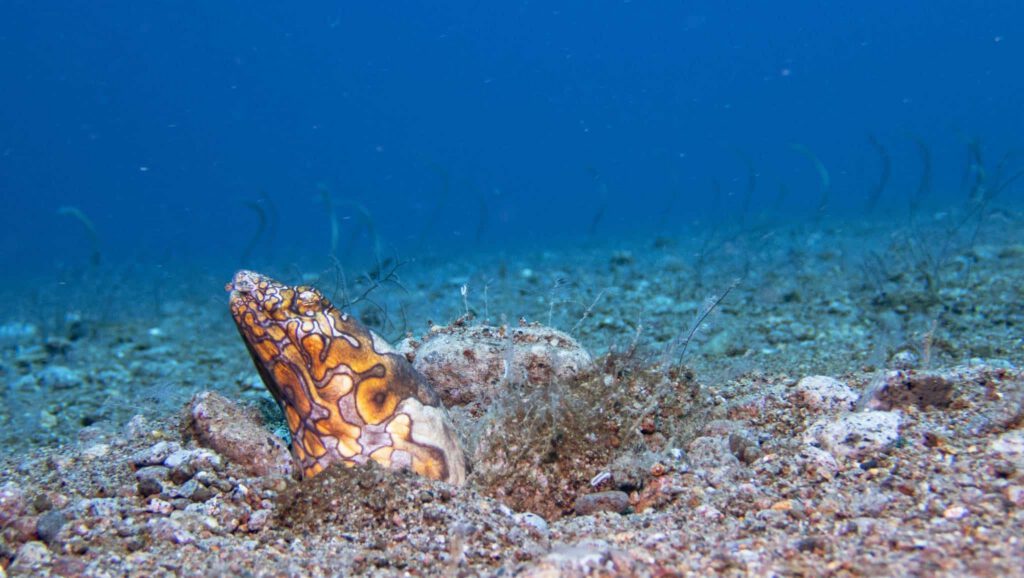
When the “ber-months” arrive in the Philippines, they bring more than the beginning of the festive season.
From September to December, divers visiting Dauin may also enjoy exciting encounters with some of the area’s most fascinating marine residents: octopuses.
Dauin, Negros Oriental, is known for its outstanding muck diving. Its dark sand, scattered rubble, seagrass, and artificial shelters may appear quiet at first, but these habitats support an extraordinary variety of small and unusual marine life.
One of the local dive sites regularly explored by Sea Explorers Dauin is Bonet’s Corner.
With patience, careful observation, and the help of an experienced dive guide, divers may discover several remarkable octopus species hiding, hunting, or moving across the sandy bottom.
Here are five of the eight-armed residents you may encounter while diving in Dauin.
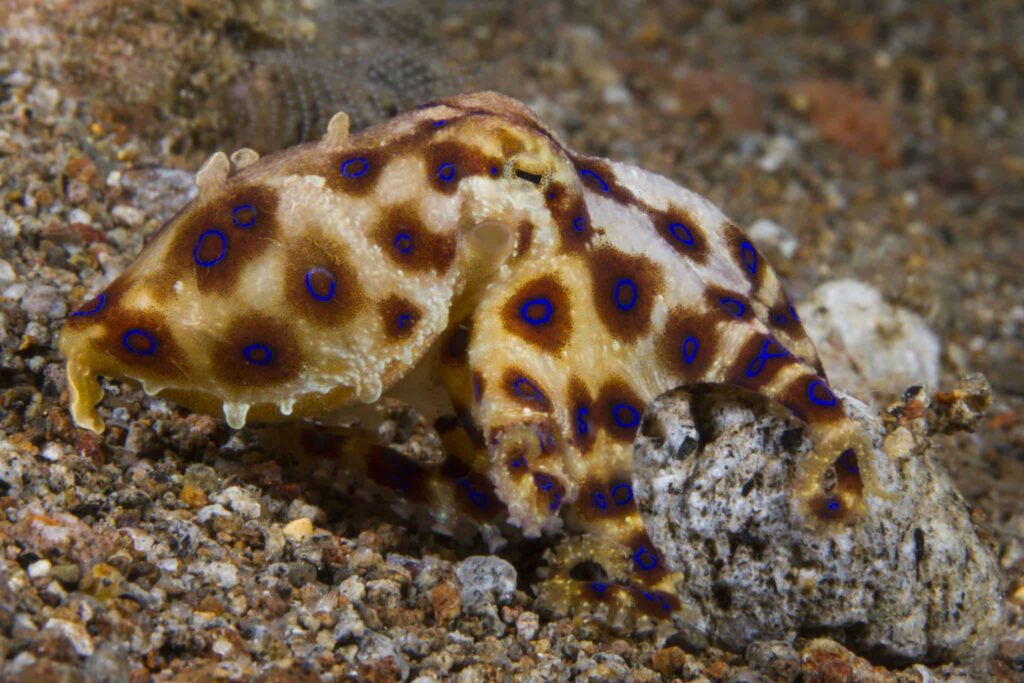
1. Blue-Ringed Octopus
The blue-ringed octopus is small, beautiful, and highly venomous.
It may appear brown, beige, or yellowish while resting or moving across the bottom. When the animal feels threatened, its bright blue rings can become much more visible.
These flashing rings are a warning signal—not an invitation to move closer.
Despite its potent venom, the blue-ringed octopus is generally shy and prefers to avoid confrontation. Divers should never touch, surround, chase, or provoke one.
Did You Know?
Blue-ringed octopuses belong to the genus Hapalochlaena. Their small size can make them difficult to spot among shells, rocks, and rubble.
The safest way to enjoy an encounter is to remain calm, maintain good buoyancy, and allow the octopus plenty of spac
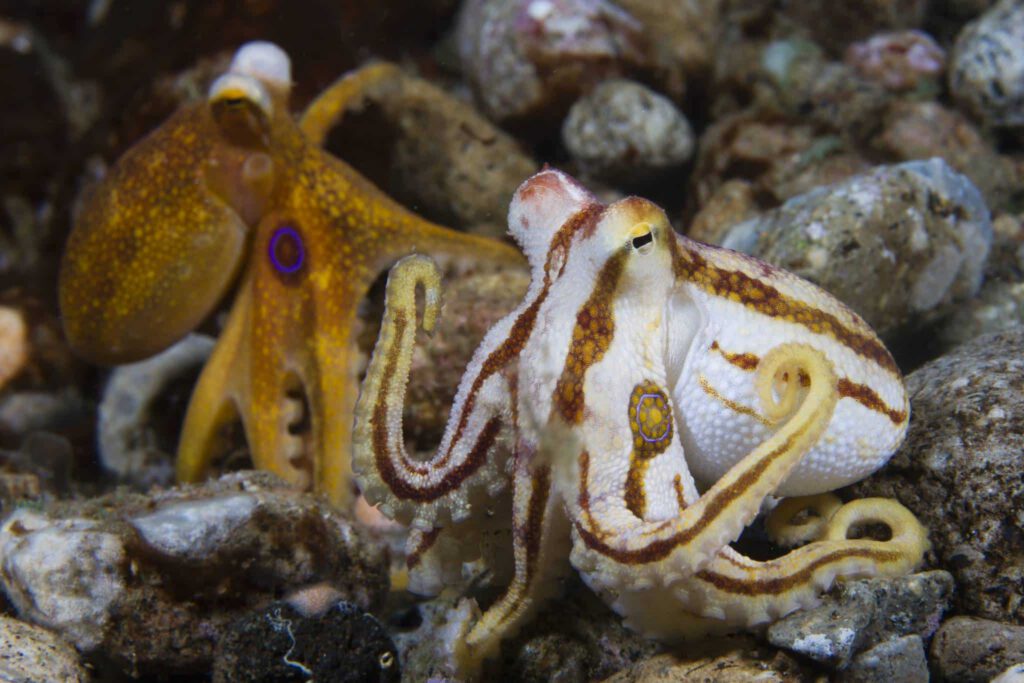
2. Mototi Octopus
The Mototi octopus, scientifically known as Amphioctopus mototi, is another striking species that can be found in sandy and rubbly habitats.
It is highly skilled at camouflage and can easily disappear against the seafloor. One of its most recognisable features is the pair of dark false-eye markings, or ocelli, on its body.
These markings may become more noticeable when the octopus is alert or disturbed.
Did You Know?
The Mototi octopus is sometimes called the poison ocellate octopus because of its distinctive eye-like spots.
Like the blue-ringed octopus, it should always be observed from a respectful distance.

3. Coconut Octopus
The coconut octopus, Amphioctopus marginatus, is one of Dauin’s most entertaining underwater subjects.
This intelligent octopus is known for collecting coconut shells, clam shells, and other objects that can be used as portable shelters. It may carry these materials beneath its body while moving across the sand before assembling them into a hiding place.
Watching a coconut octopus arrange its shelter is a memorable experience for divers and underwater photographers.
Did You Know?
The coconut octopus is widely known for its tool-like use of shells and coconut husks.
However, divers should never move, remove, or rearrange the objects around it. What may look like an empty shell could be an important shelter or escape route.
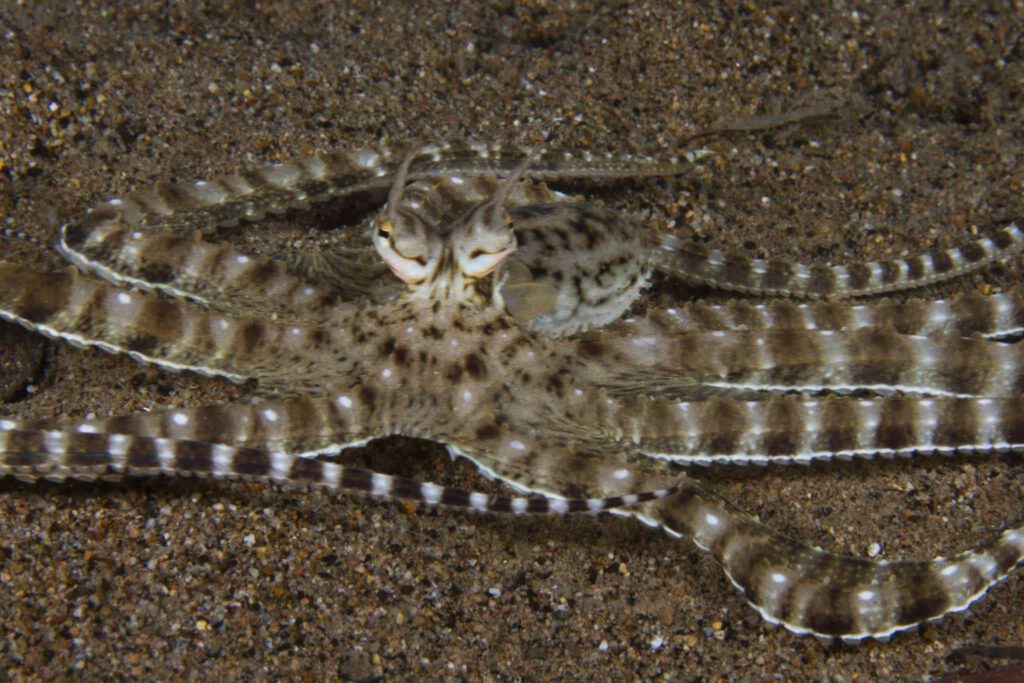
4. Mimic Octopus
The mimic octopus, Thaumoctopus mimicus, is one of the most famous inhabitants of muck-diving environments.
Its long arms and flexible body allow it to change its posture, movement, colour, and shape. It has been observed imitating the appearance or behaviour of other marine animals, including flatfish, lionfish, and sea snakes.
Scientists have documented the mimic octopus changing its behaviour in response to different threats, making it one of the underwater world’s most remarkable performers.
Did You Know?
The mimic octopus does not rely on just one disguise.
It may alter the way it swims, positions its arms, or moves across the bottom depending on what is happening around it.
During an encounter, give the animal room to behave naturally instead of trying to make it perform.
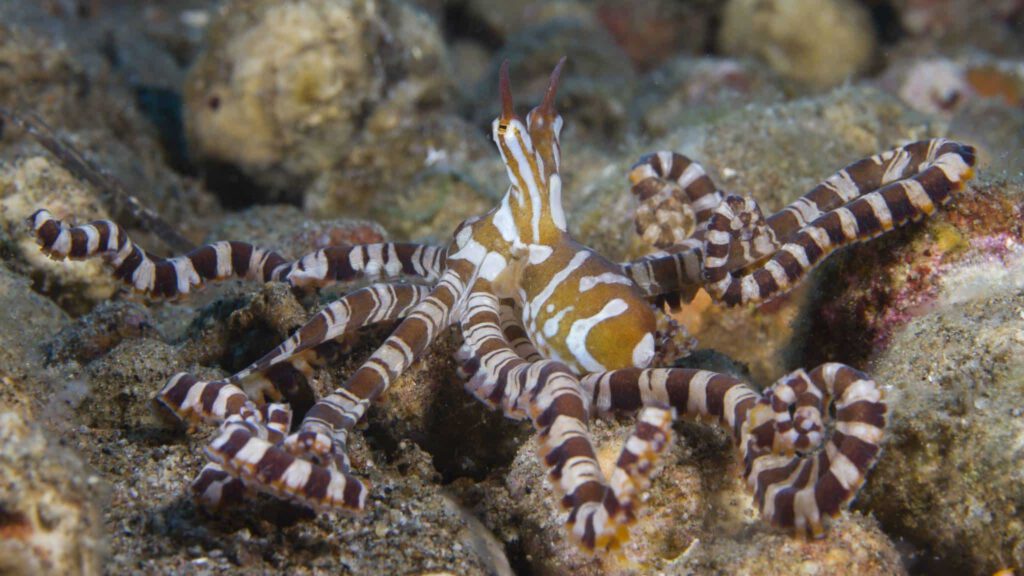
5. Wunderpus
The wunderpus, Wunderpus photogenicus, is instantly recognisable because of its dramatic brown-and-white pattern and long, slender arms.
Its beautiful markings make it a favourite among underwater photographers. However, its appearance is not the only thing that makes it special.
Each wunderpus has an individual pattern of white markings. These differences can help researchers distinguish one animal from another.
Did You Know?
The scientific name Wunderpus photogenicus reflects the animal’s striking and highly photogenic appearance.
Mimic octopuses and wunderpus can sometimes appear similar, especially during a brief encounter. An experienced local guide can help divers recognise their different body shapes, patterns, and behaviour.
Why Is Bonet’s Corner Special?
At first glance, Bonet’s Corner may appear to be a simple area of sand and rubble.
Look more closely, however, and the landscape begins to change.
Small holes may hide octopuses, shrimp, gobies, or other marine animals. Discarded shells can become shelters, while rubble and debris provide places to hunt, rest, and escape from predators.
This type of diving is often called muck diving. Instead of swimming over large coral formations, divers move slowly above sandy or silty habitats while searching for unusual marine life.
Patience is essential.
A skilled dive guide knows where to look and how to recognise small clues, such as moving sand, a pile of shells, a change in texture, or an eye watching from a hidden burrow.
While seeing several octopus species during one dive is possible, wildlife encounters can never be guaranteed. Water conditions, animal behaviour, seasonality, and simple good fortune all play a part.
Discover more local sites in our guide to the best dive sites in Dauin.
Tips for Responsible Octopus Encounters
Octopuses are intelligent but sensitive animals. Divers and photographers should take care not to alter their natural behaviour.
During an encounter:
- Maintain good buoyancy and stay above the bottom.
- Never touch, chase, corner, or block an octopus.
- Do not move shells or objects around its shelter.
- Avoid placing cameras directly in front of its escape route.
- Give the animal space if it changes colour or tries to hide.
- Follow your guide’s instructions.
- Keep fins, gauges, and equipment away from the sand.
- Never encourage an octopus to display defensive behaviour.
A relaxed octopus may continue hunting, exploring, or interacting with its surroundings. A stressed octopus may hide, flee, release ink, or expose warning colours.
The best encounters happen when divers remain patient and allow the animal to decide what happens next.
Underwater Photography at Bonet’s Corner
Bonet’s Corner can be an exciting site for underwater photographers, but good positioning is essential.
Approach slowly and avoid settling on the bottom. Before taking photographs, check where your fins, knees, hoses, and equipment are positioned.
Take a few thoughtful images rather than following an animal continuously. When several photographers are present, take turns so the octopus always has an open escape route.
It is also important to listen to the dive guide. Local guides are familiar with the site and can help photographers find a safe angle without disturbing the animal or damaging the surrounding habitat.
When Is the Best Time to Look for Octopuses in Dauin?
Our team often enjoys interesting octopus encounters during the Philippine “ber-months,” from September through December.
However, Dauin is a year-round diving destination, and octopuses may be encountered during other months as well.
Marine-life sightings depend on natural conditions and cannot be promised. That uncertainty is part of what makes muck diving so exciting: every dive is different, and every discovery feels special.
Dauin also offers access to colourful reefs, marine sanctuaries, and Apo Island, giving divers the opportunity to combine macro diving with a very different reef experience. Learn more about diving in Dauin with Sea Explorers Philippines or explore our Apo Island diving day trips.
Discover Dauin’s Eight-Armed Residents
A sandy dive site may not look dramatic from the surface, but below the water, it can reveal an entire world of camouflage, intelligence, and unexpected behaviour.
From the flashing rings of a blue-ringed octopus to the portable shelter of a coconut octopus, every encounter offers a glimpse into the remarkable lives of cephalopods.
Come with patience, respect their space, and let our experienced local guides help you discover the small wonders hiding at Bonet’s Corner.
Ready to explore the muck-diving capital of the Philippines?
Browse our Dauin diving destination, discover our PADI diving courses, or contact Sea Explorers Philippines to plan your dive holiday.
Dive with a Smile and meet Dauin’s amazing eight-armed residents.

