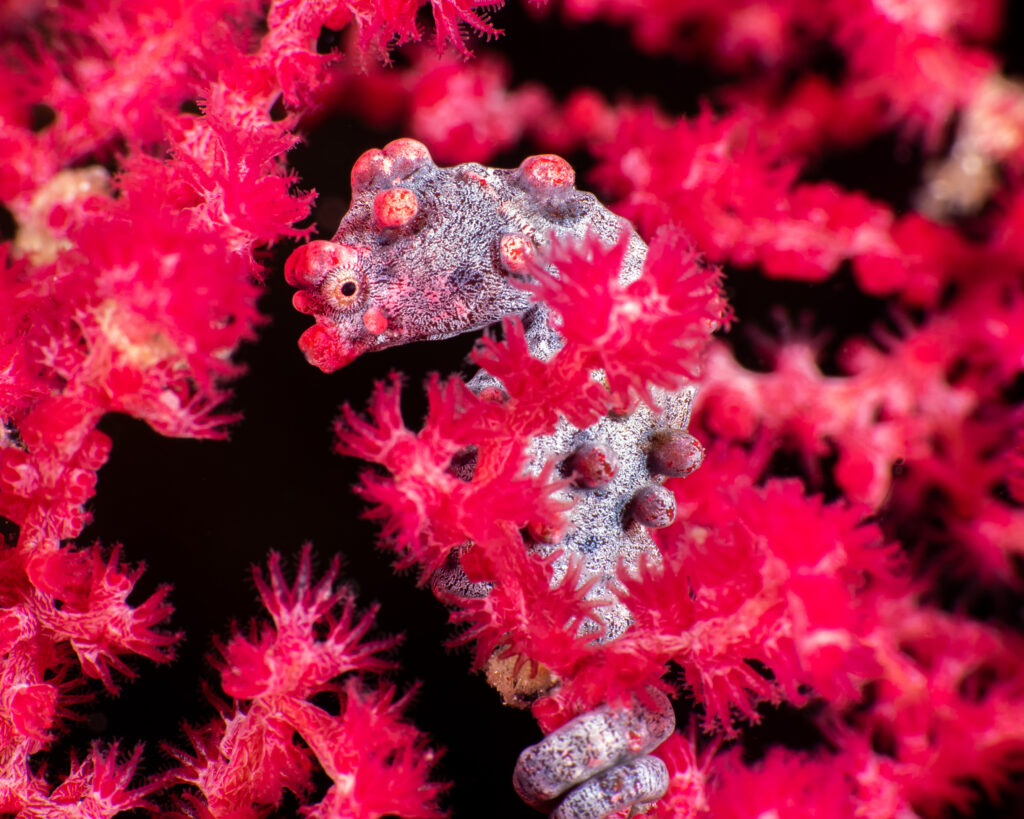
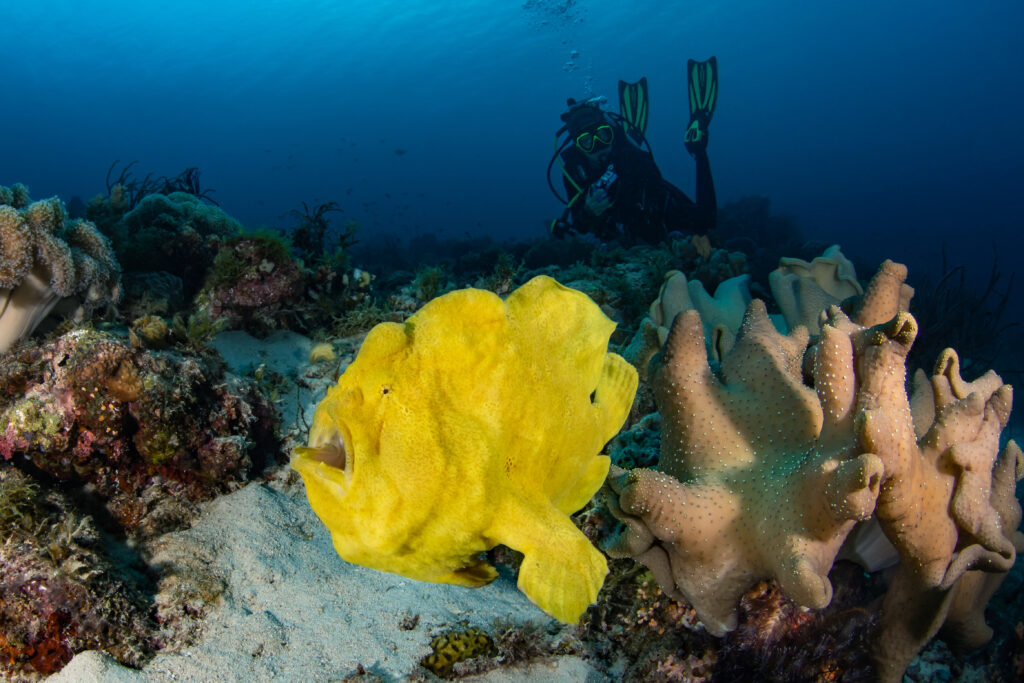
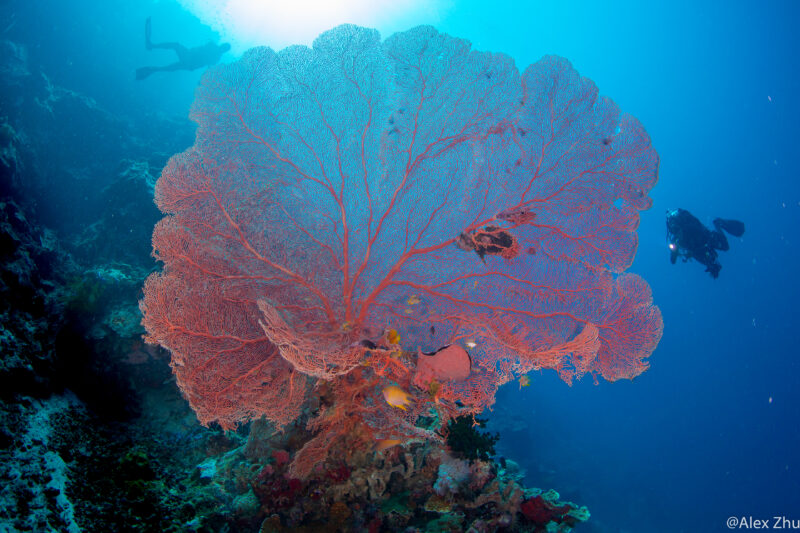
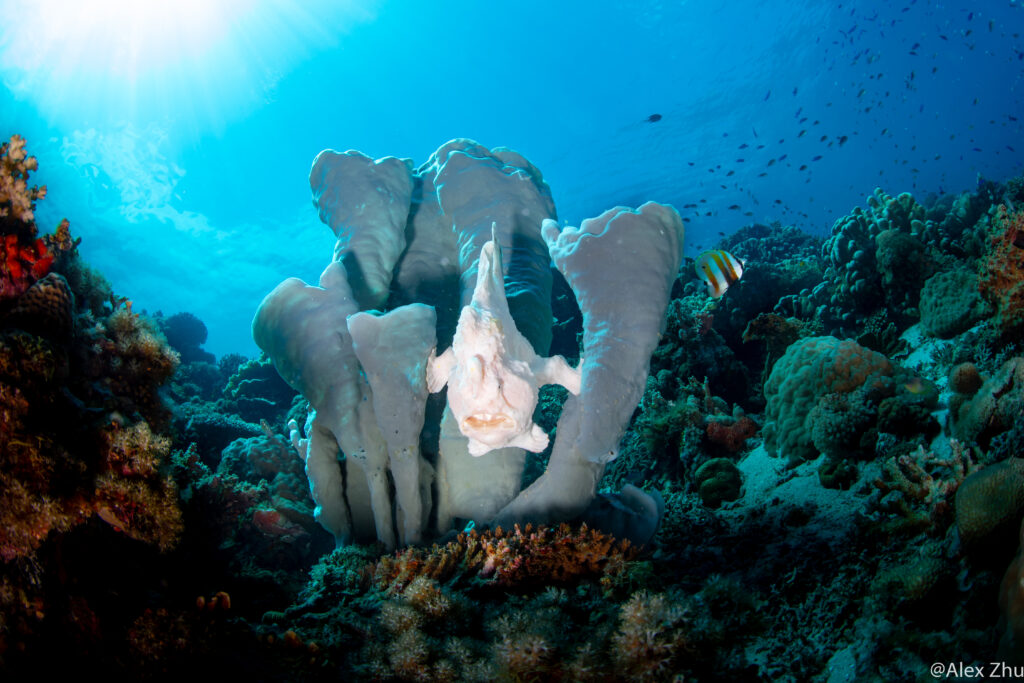
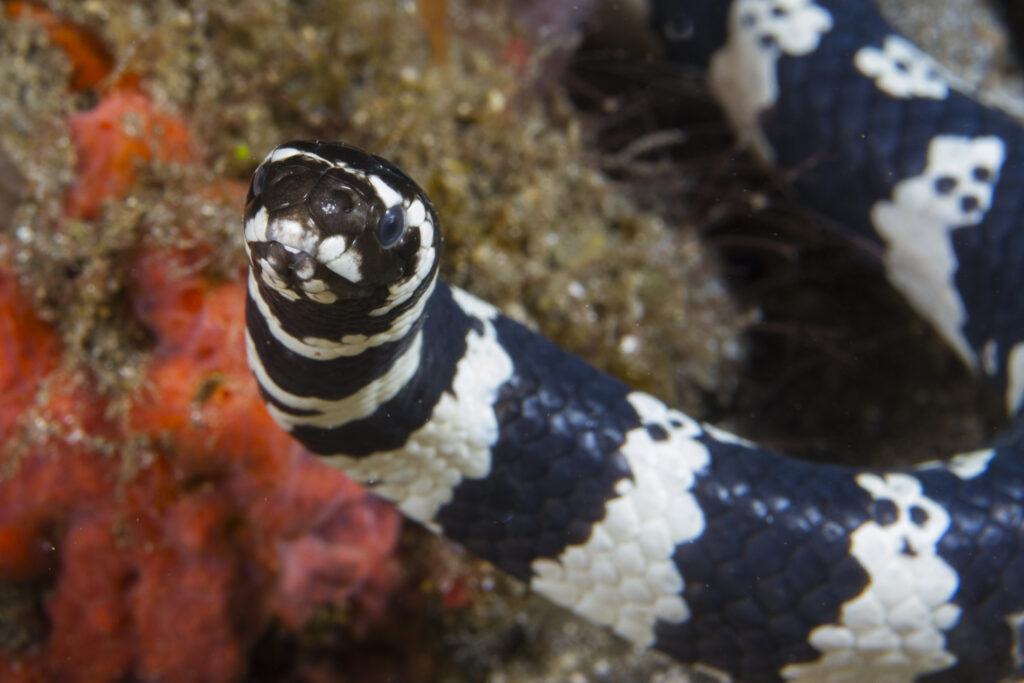
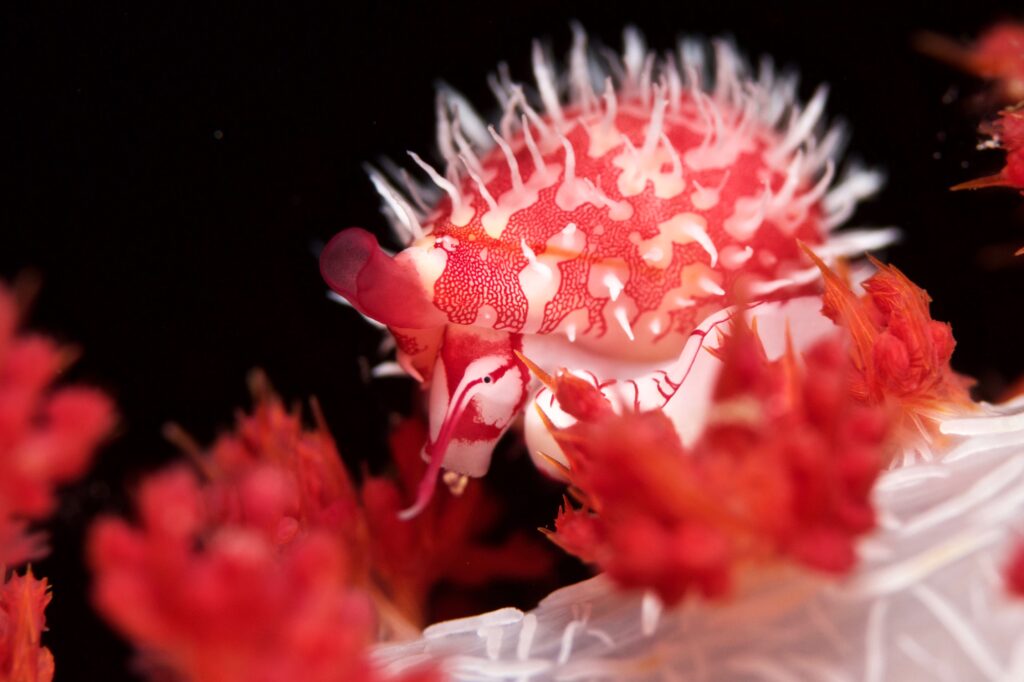
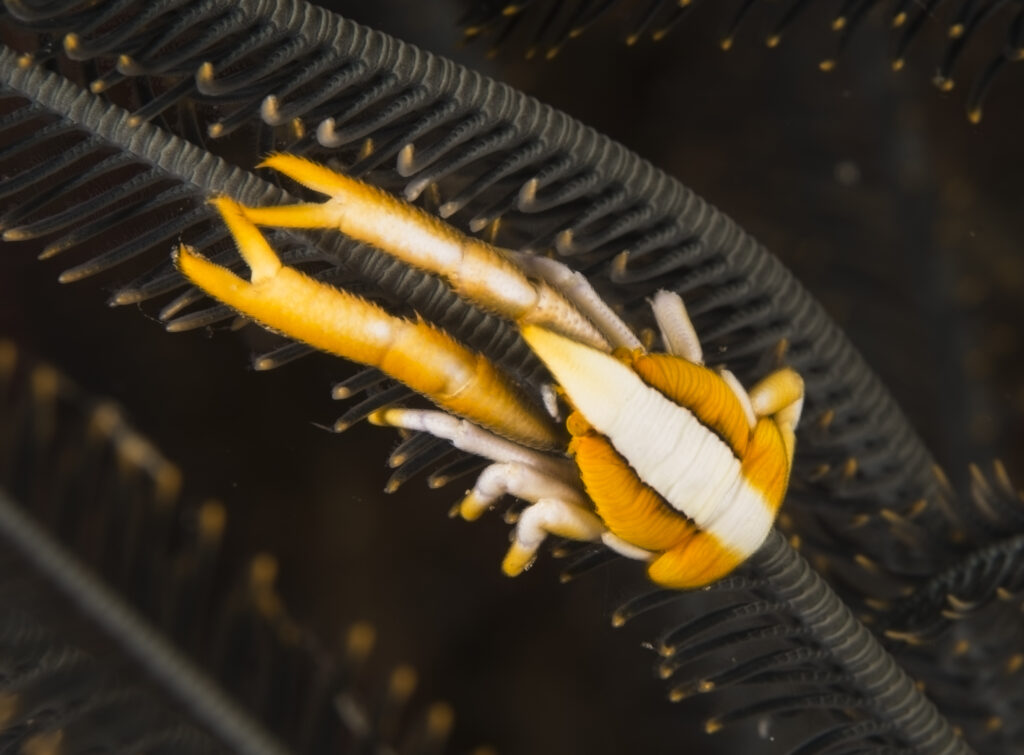
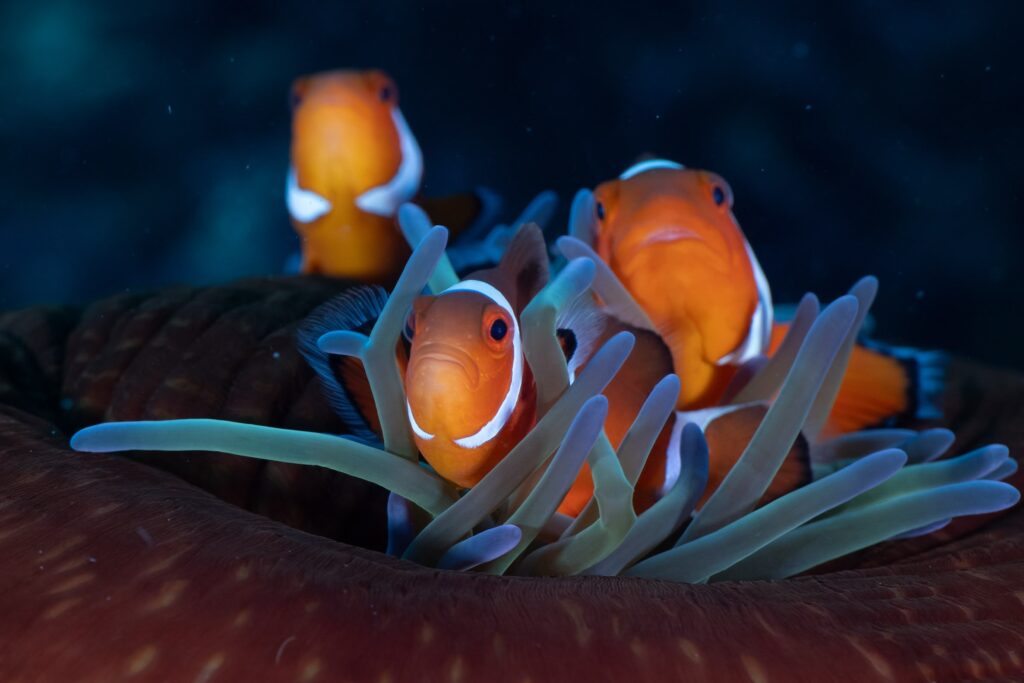
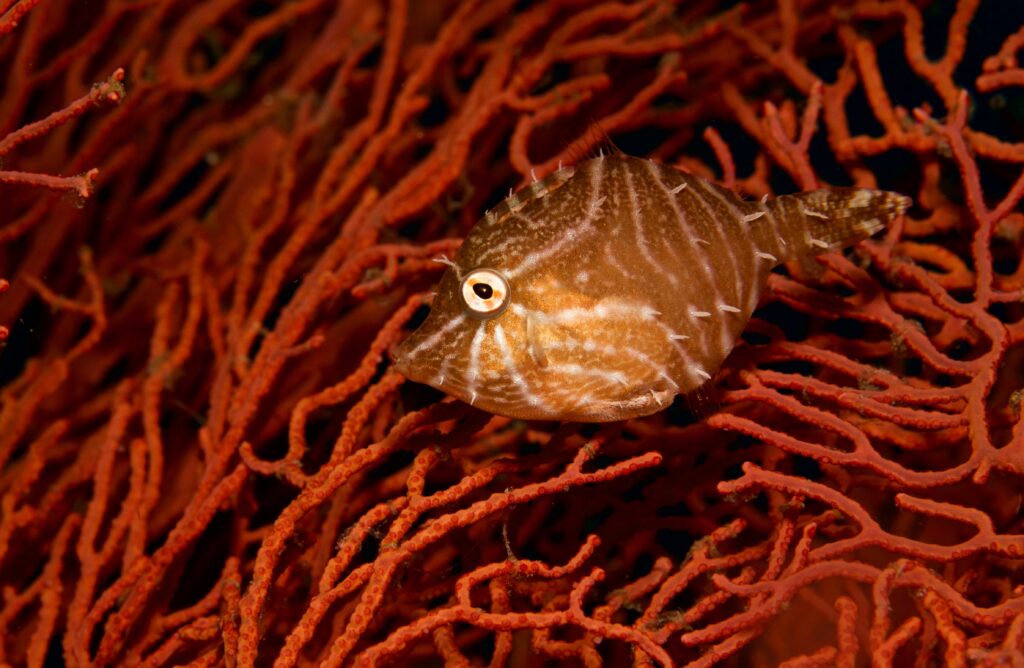
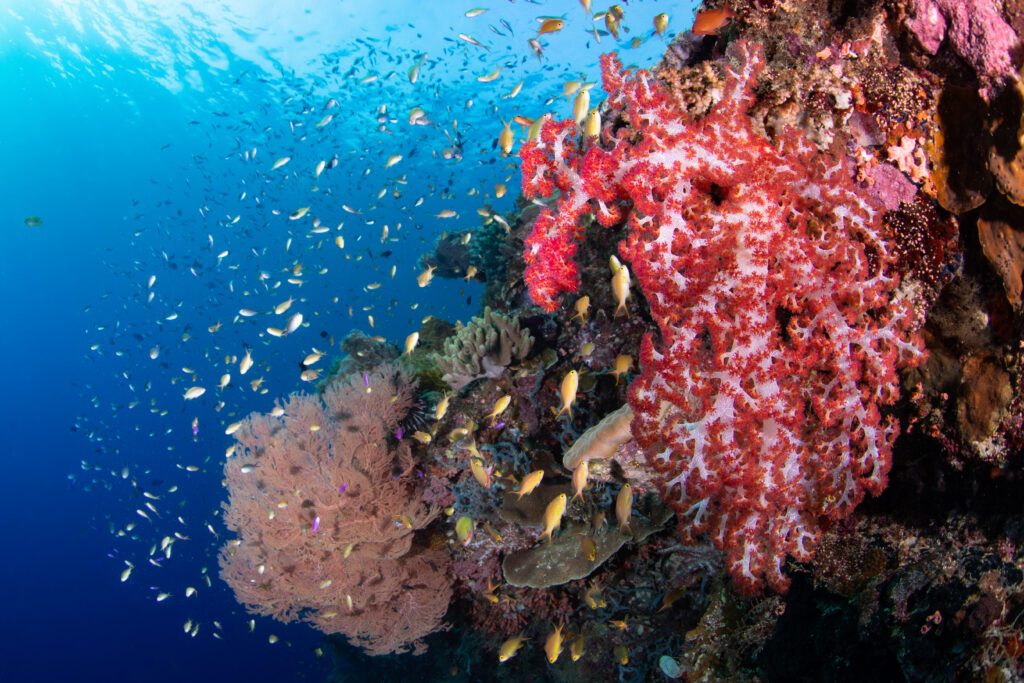
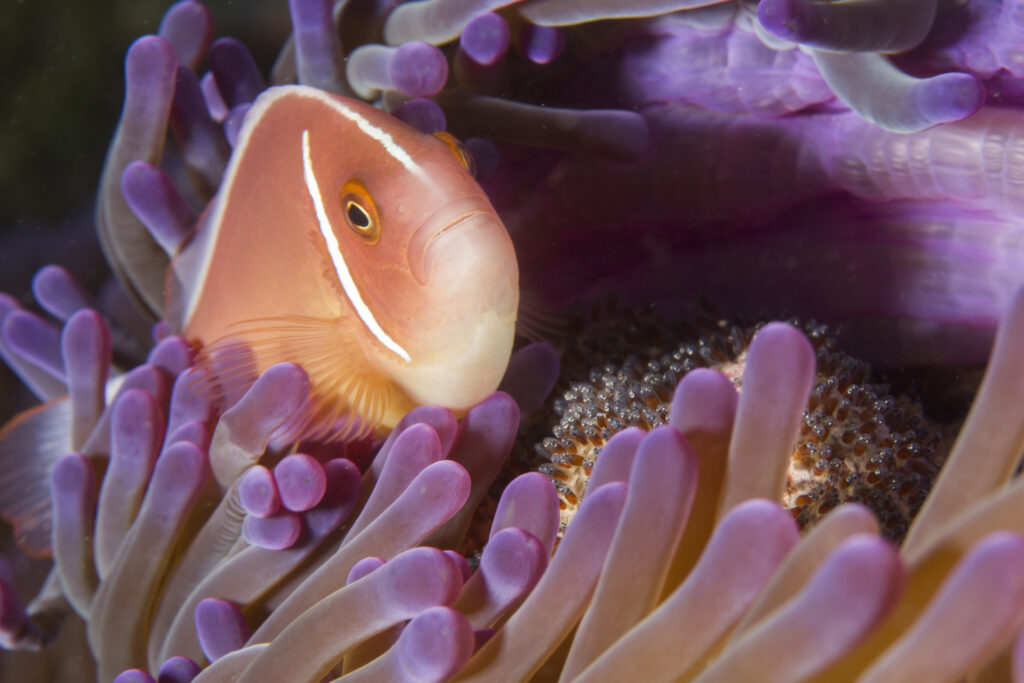
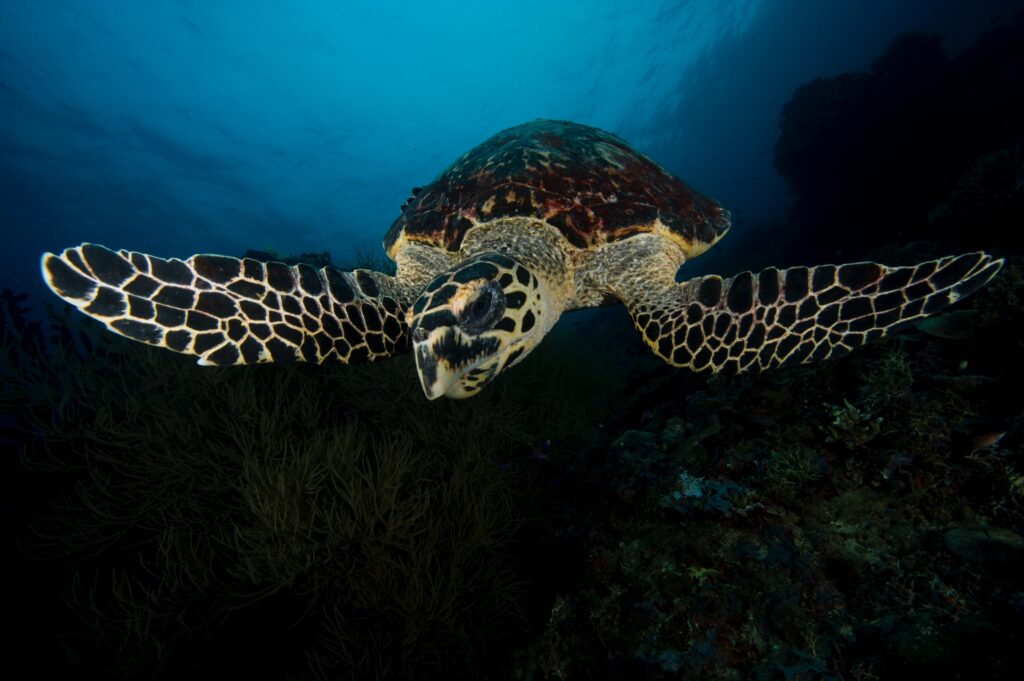
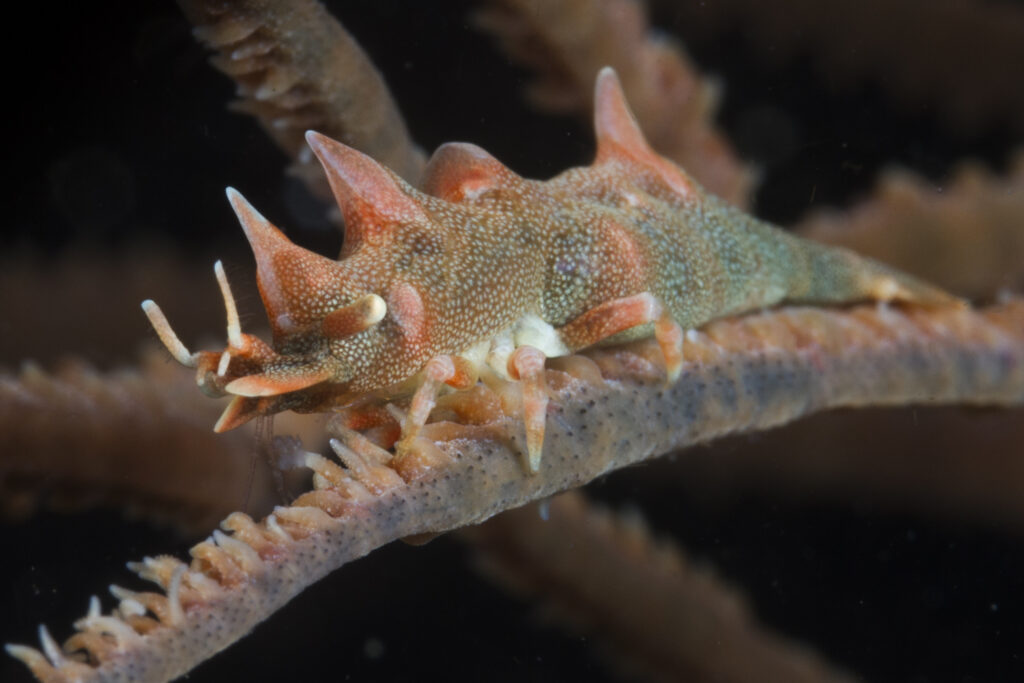
Cabilao Island is known for its beautiful coral walls, large gorgonian sea fans, healthy reefs, gentle slopes, and excellent macro life. Dive sites range from shallow coral gardens suitable for relaxed dives to dramatic walls, caves, overhangs, and current-swept areas for more experienced divers. Around nearby Pangangan and Sandingan Islands, divers can also explore quiet reefs, sandy areas, seagrass beds, and productive macro sites.
Pura Vida Housereef
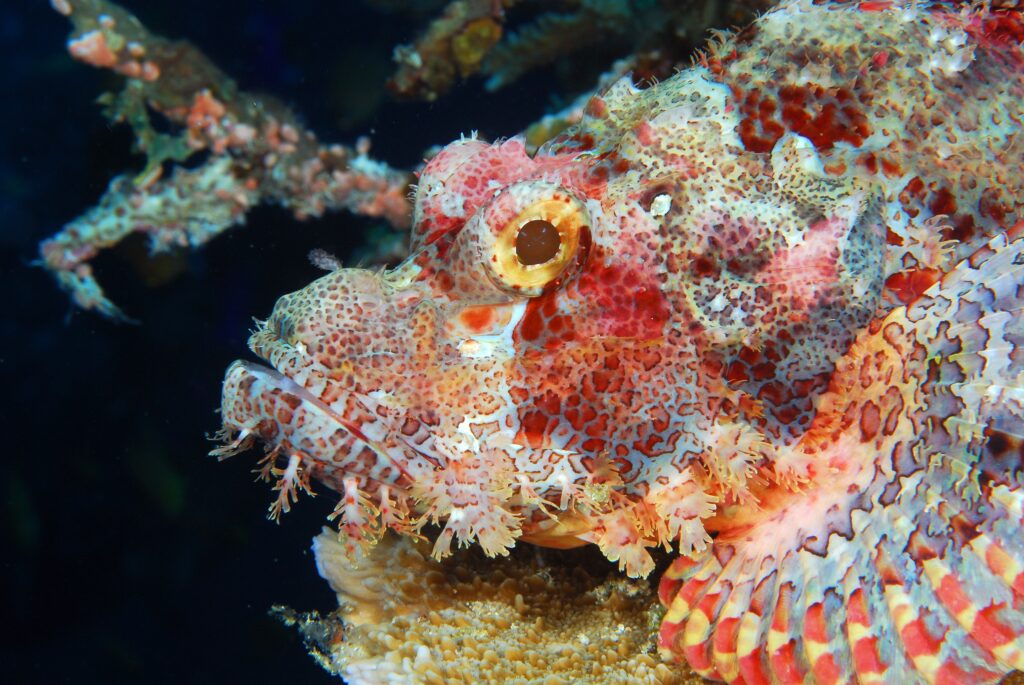
Situated directly in front of the Sea Explorers Cabilao Dive Center, the House Reef is easily accessible and offers something for divers of all experience levels. The reef is especially suitable for macro lovers, with nudibranchs, longnose hawkfish, anemonefish, scorpionfish, stonefish, and occasional sea turtles. Its calm and familiar setting also makes it ideal for check dives, relaxed afternoon dives, underwater photography, and night diving.
Current View Point
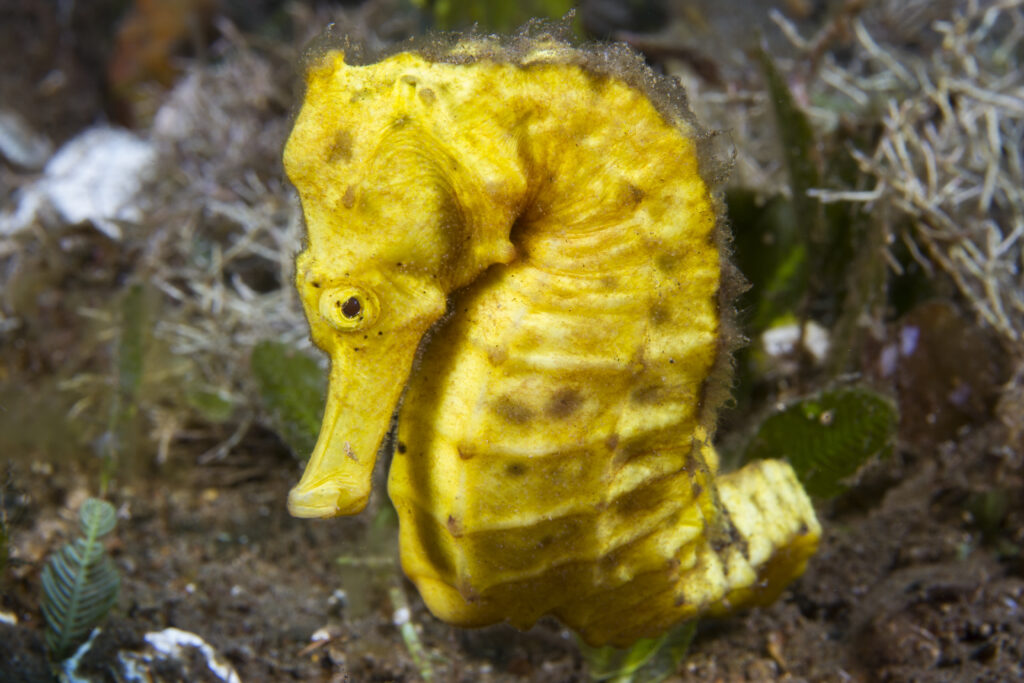
Located on the northwestern corner of Cabilao Island, Current View Point features a sandy plateau at approximately 25 to 30 metres. As its name suggests, currents can sometimes be present, bringing schools of barracuda, jacks, and other pelagic fish into the area. Look carefully among the sea fans and coral growth for pygmy seahorses, ghost pipefish, nudibranchs, and thorny seahorses. Whitetip reef sharks may also be encountered along the deeper sections.
Lighthouse
Lighthouse offers a beautiful combination of sandy areas, seagrass, coral formations, and a gentle slope descending to approximately 20 metres. It is an excellent site for underwater photographers and macro enthusiasts, with opportunities to find ghost pipefish, scorpionfish, sea moths, stargazers, snake eels, shrimps, crabs, and many other unusual creatures. The site is enjoyable during the day and becomes even more interesting after sunset.
Lighthouse Two
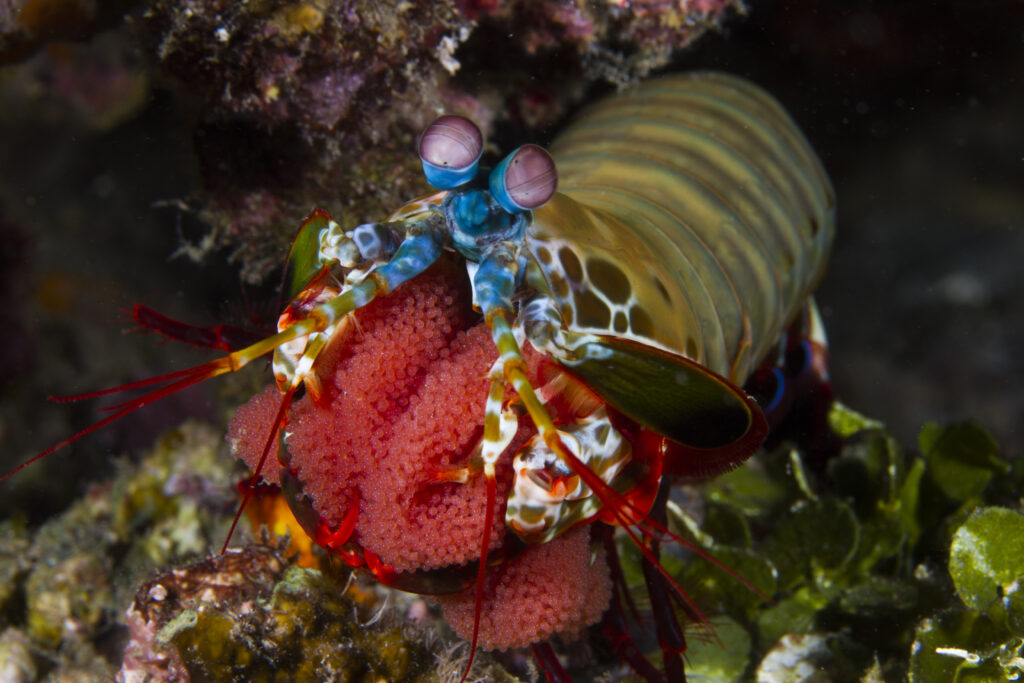
Lighthouse Two is a gentle sandy slope with seagrass patches and scattered coral formations. The site is home to an impressive variety of macro creatures, including leaf scorpionfish, ghost pipefish, sea moths, mantis shrimps, harlequin shrimps, nudibranchs, octopuses, turtles, and occasionally eagle rays. Pygmy seahorses may also be found on deeper sea fans, making this a rewarding site for patient observers and underwater photographers.
Gorgonia Wall
Gorgonia Wall is one of Cabilao’s signature dive sites. Beginning at approximately 5 metres and descending to around 60 metres, the wall is covered with giant gorgonian sea fans, sponges, soft corals, and hard corals. Small caves and overhangs provide shelter for reef fish, frogfish, nudibranchs, and pygmy seahorses. The afternoon light beautifully illuminates the wall and highlights its colourful coral formations.
Cambaquiz
Located near Pura Vida Cabilao, Cambaquiz combines a deep wall with a gentler reef slope. The wall descends beyond recreational diving depths and contains several caves and overhangs. Along the shallower section, divers can explore colourful corals while looking for turtles, reef fish, nudibranchs, and other small creatures. At night, the sandy areas may reveal stargazers, octopuses, crabs, and shrimps.
Fallen Tree and Talisay Tree
This site begins with a gradual slope reaching approximately 18 metres before continuing into a steep wall. Depending on the current, it can offer an enjoyable drift dive for more experienced divers. Barracudas and turtles may appear in the blue, while the reef and sandy areas provide opportunities to find frogfish, sea moths, nudibranchs, cardinalfish, and colourful reef fish.
Chapel Point
Chapel Point is particularly beautiful in the afternoon when sunlight reaches the reef at the right angle. The shallow section features caves, hard corals, large table corals, and abundant reef fish. Farther down, a steep wall covered in soft corals and gorgonian sea fans descends to approximately 50 metres. Small frogfish and many varieties of nudibranchs can be found by divers who take their time exploring the reef.
South Point
South Point is a dramatic wall dive with overhangs, caves, and dense coral growth. The wall drops to approximately 60 metres, while the shallower section between 5 and 12 metres is covered with impressive hard-coral formations. Schools of fish often patrol the reef, and whitetip reef sharks may occasionally rest inside the caves at around 20 metres. Mild currents can occur around the point.
Balay Reef
Balay Reef combines beautiful coral gardens with a wall running parallel to the shoreline. Beginning at approximately 5 metres, the wall descends to around 60 metres and is decorated with large gorgonian sea fans, soft corals, hard corals, caves, and overhangs. Reef fish, nudibranchs, frogfish, and occasional Napoleon wrasse may be encountered. Afternoon dives are especially attractive when sunlight illuminates the wall.
Pangangan Wall
Pangangan Wall offers an interesting combination of shallow muck diving and a colourful coral wall. Between approximately 3 and 6 metres, divers can search among rocks and sandy patches for sea moths, devil scorpionfish, nudibranchs, and other small creatures. The wall begins at around 7 metres and descends to approximately 60 metres, with soft corals, hard corals, ghost pipefish, ribbon eels, juvenile batfish, and occasional eagle rays or whitetip reef sharks.
Paradise
Paradise combines a coral-covered wall with a gentle slope and shallow seagrass areas. Hard corals dominate the deeper reef, while soft corals, sponges, sandy patches, and coral blocks create excellent habitats for smaller marine creatures. It is a varied dive that allows divers to enjoy both wide-angle reef scenery and close-up macro encounters.
Bamboo Reef
Bamboo Reef is a relaxed dive site that is suitable for beginners as well as experienced divers. The shallow area consists of seagrass, coral blocks, sponges, soft corals, and numerous anemones. Anemonefish, shrimps, turtles, octopuses, and cuttlefish can often be observed. It is particularly enjoyable during afternoon and night dives, when many nocturnal creatures begin to emerge.
Sandingan Slope
Sandingan Slope is a gentle coral and sandy slope descending to approximately 30 metres. Coral blocks, seagrass, and open sandy areas create a productive environment for macro life. Divers can search for stargazers, nudibranchs, frogfish, crabs, shrimps, and other well-camouflaged creatures. Turtles and barracudas may also pass through the area. The site is especially attractive during morning dives.
Mocpoc Pier
Mocpoc Pier is a shallow and interesting macro-diving site near Sandingan Island. The pier structures, sandy bottom, scattered rubble, and small coral growth provide shelter for many unusual marine creatures. Divers should move slowly and look carefully for nudibranchs, shrimps, crabs, small scorpionfish, pipefish, juvenile fish, and other well-camouflaged subjects. Its shallow depth allows plenty of time for exploration and underwater photography.
Talisay Pier
Talisay Pier features a shallow seagrass area with coral blocks leading towards a steep slope and wall. The reef contains interesting hard-coral formations, nudibranchs, reef fish, and schooling barracudas. Its combination of shallow macro habitats and deeper reef scenery makes it suitable for divers interested in both small marine creatures and wider underwater landscapes.
Dive-site selection depends on weather, currents, diver experience, and local conditions. Marine-life encounters are seasonal and cannot be guaranteed. Our Sea Explorers Cabilao team will select the most suitable dive sites each day so every guest can enjoy safe and memorable diving around Cabilao, Pangangan, and Sandingan Islands—always with a smile.