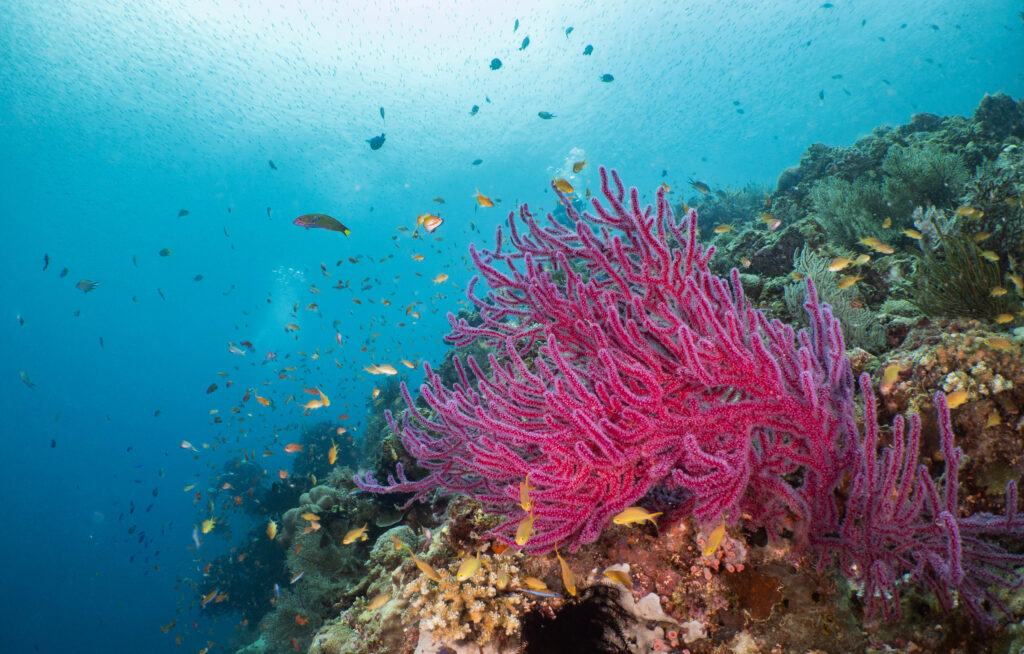
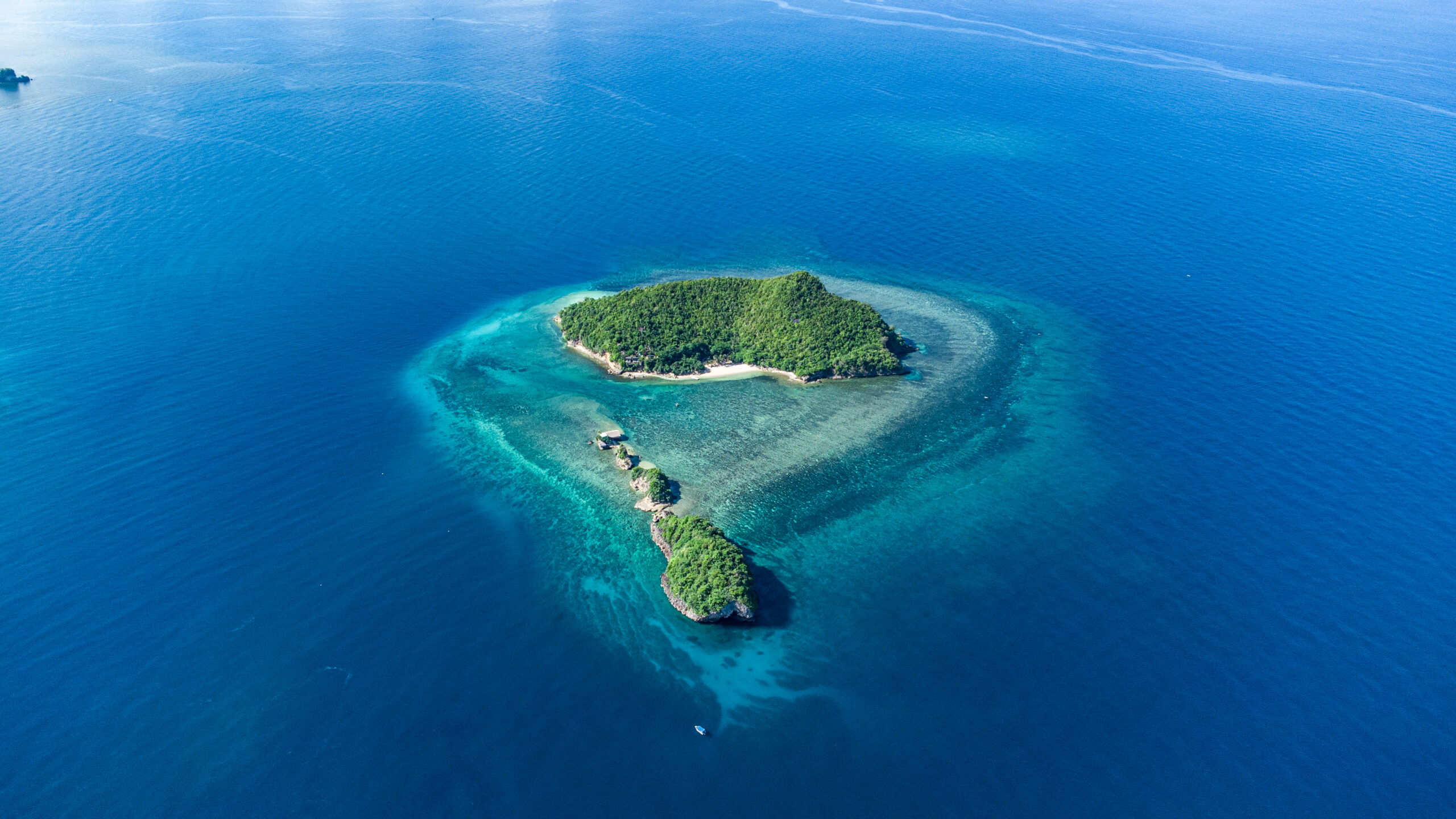
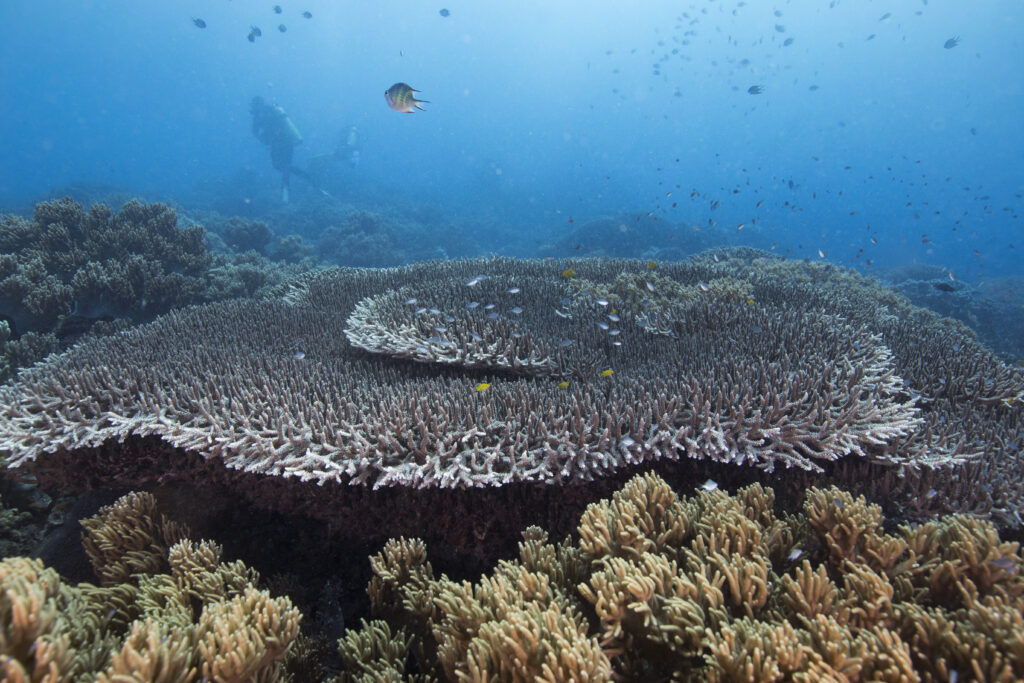
Sipalay, on the western coast of Negros Occidental, offers relaxed and uncrowded diving with colourful coral gardens, dramatic reef formations, sandy macro areas, caves, and historic shipwrecks. Many local dive sites are reached by a short boat ride from Sea Explorers Sipalay, while full-day trips extend the adventure to Turtle Island and Danjugan Island.
Conditions and marine-life encounters vary throughout the year. The Sea Explorers team selects each site according to the weather, currents, visibility, and experience level of the divers.
Marco Polo
Marco Polo is one of Sipalay’s signature dive sites. This submerged, atoll-style reef rises from deeper surrounding water and is covered with healthy hard and soft corals. Schools of reef fish gather around the formation, while larger fish may pass through the blue. Its beautiful coral scenery and generally good visibility make Marco Polo an excellent site for wide-angle underwater photography and experienced divers.
Julien’s Wreck
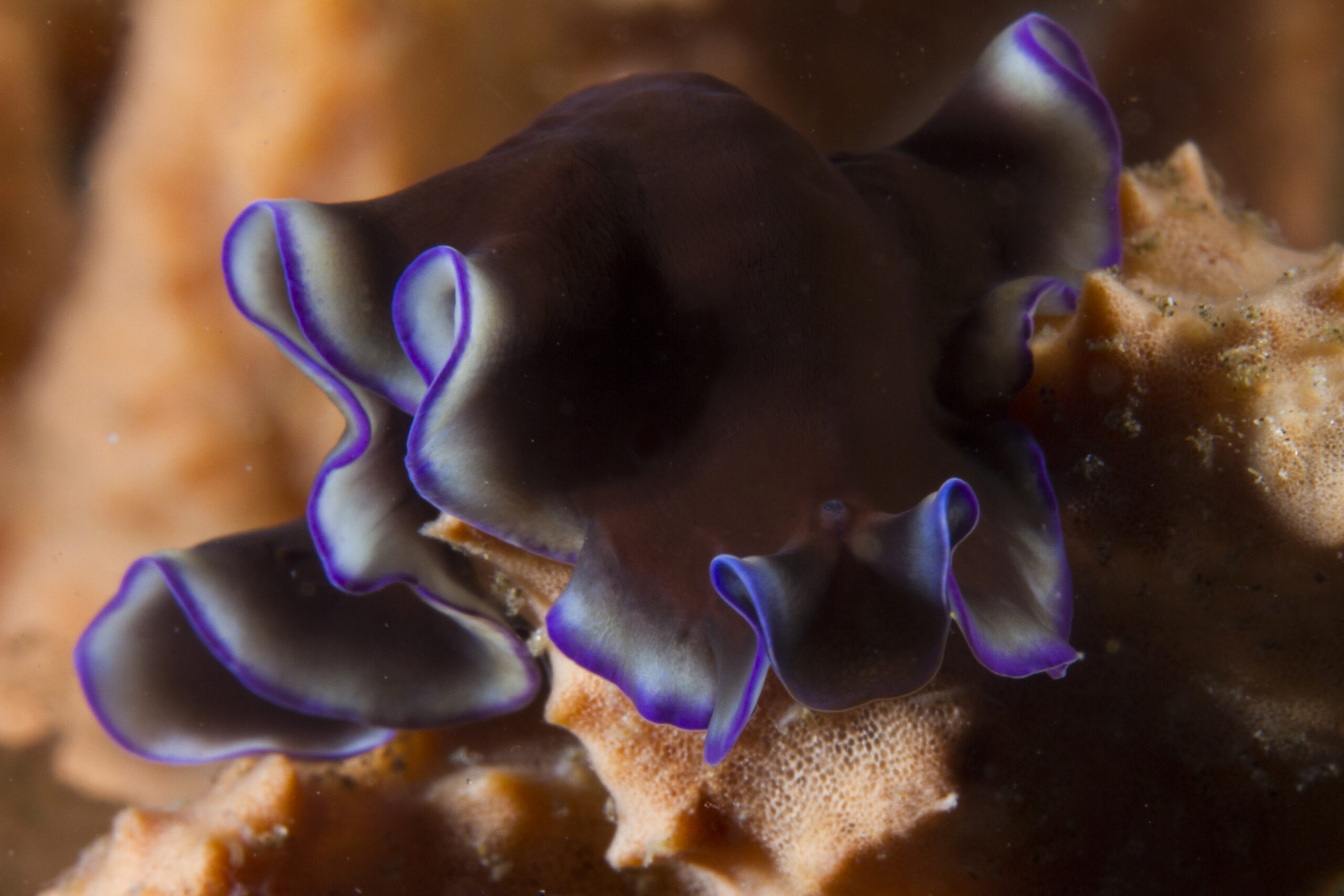
Also known as the M/V Guimaras, Julien’s Wreck is one of Sipalay’s best-known wreck dives. The vessel has developed into an artificial reef, attracting schooling fish, lionfish, scorpionfish, batfish, nudibranchs, and other marine life. Its structure offers plenty to explore from the outside
SS Panay
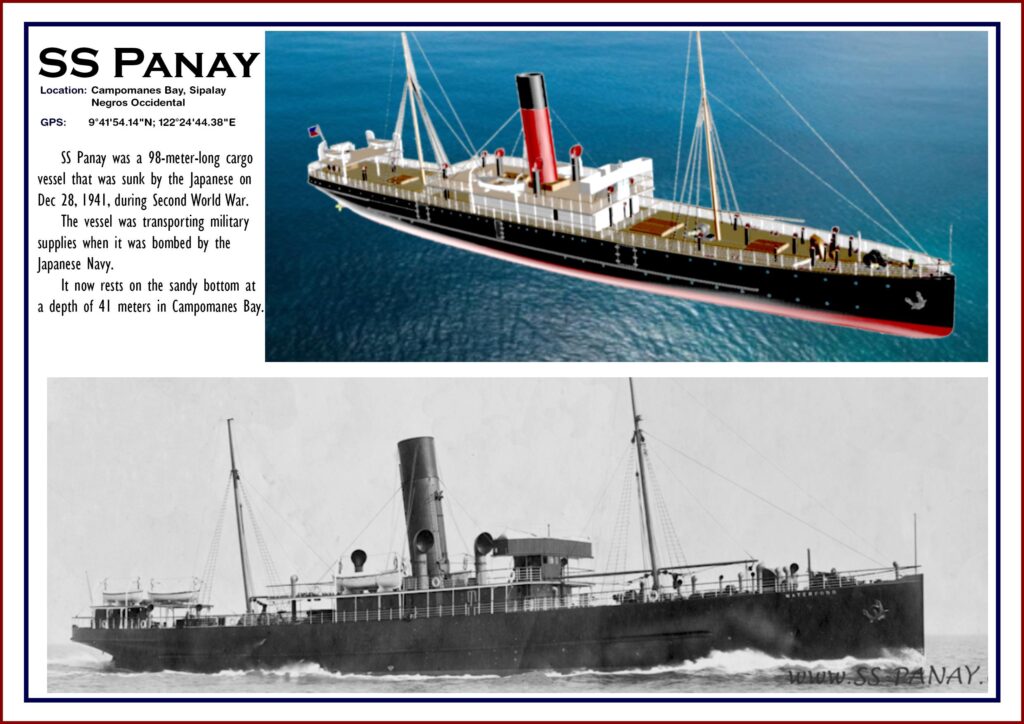
SS Panay is a historic Second World War wreck located in deeper water near Sipalay. The large vessel remains an impressive sight and now provides shelter for schools of fish and other marine life. With the upper part of the wreck beginning at approximately 33 metres, this dive is intended for advanced divers who are comfortable with deeper profiles and limited bottom time.
MS Jojo
MS Jojo is a large freighter resting on its side at recreational diving depths. The wreck is known for its impressive structure and the marine life gathering around its decks and cargo areas. Batfish, lionfish, scorpionfish, and schools of reef fish may be encountered during the dive. Due to its depth and size, the site is best enjoyed by experienced divers with good buoyancy control.
Ayer’s Rock
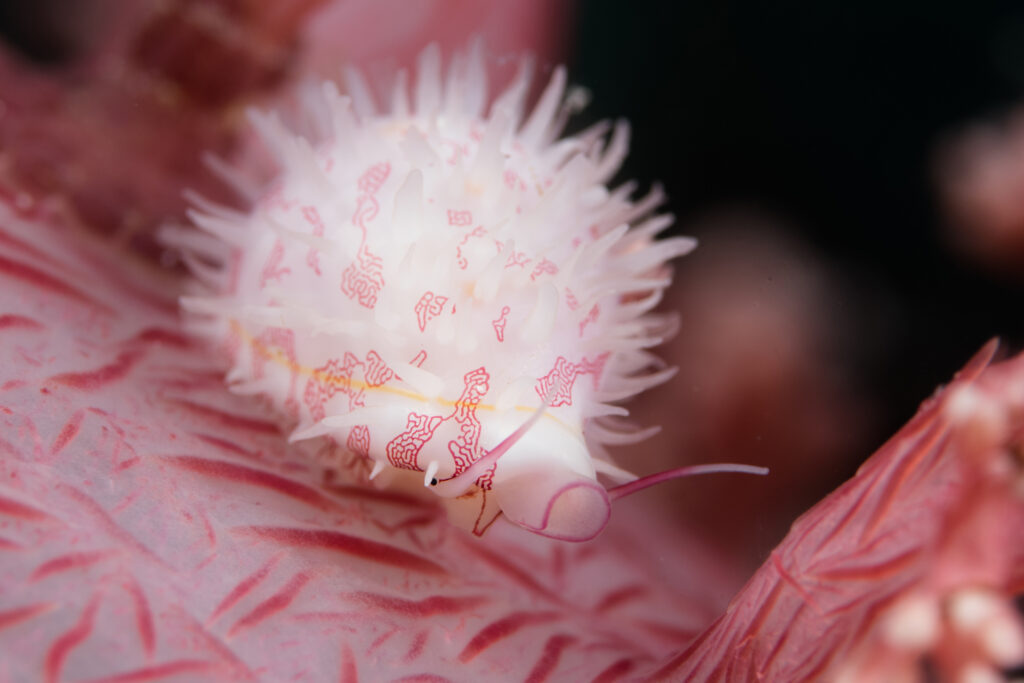
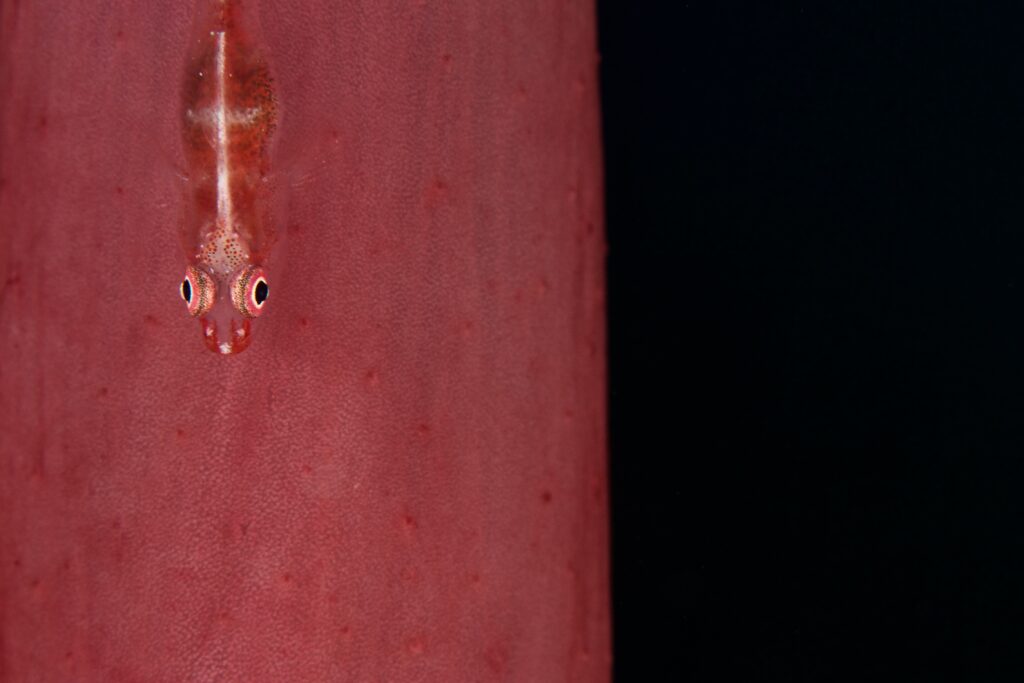
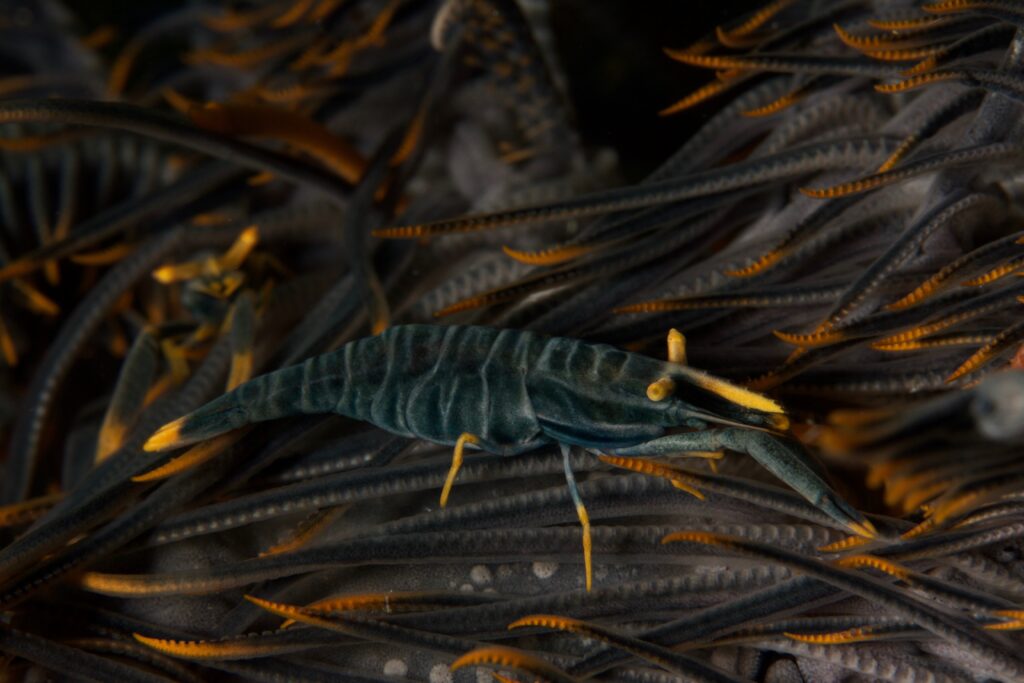
Ayer’s Rock is a submerged reef formation covered with hard and soft corals. The site offers varied underwater scenery, with coral-covered ridges, sandy sections, and plenty of reef fish. Its deeper areas may attract larger marine life, while the shallower sections provide opportunities to search for nudibranchs, shrimps, and other smaller creatures.
Disneyland
Disneyland lives up to its playful name with colourful coral formations and a lively collection of tropical reef fish. The site offers an enjoyable and relaxed dive over coral gardens, small reef structures, and sandy patches. Divers can look for butterflyfish, angelfish, anemonefish, moray eels, nudibranchs, and occasional turtles.
OLYMPUS DIGITAL CAMERA
Eva’s Point
Eva’s Point features a coral-covered wall that begins in shallow water and descends into deeper sections. Cracks and small overhangs provide shelter for reef fish, moray eels, lionfish, nudibranchs, and crustaceans. The shallow top of the reef is ideal for finishing the dive among colourful corals while enjoying a long and interesting safety stop.
Langub Caves
Langub Caves offers an adventurous underwater landscape with rocky formations, small caverns, overhangs, and coral-covered sections. Divers can explore the exterior of the formations while searching for soldierfish, cardinalfish, moray eels, lobsters, shrimps, and other animals that prefer darker areas. Entry into enclosed spaces should only be considered when conditions and diver training are appropriate.
Virgin Garden
Virgin Garden features a peaceful coral reef with healthy hard corals, soft corals, and abundant tropical fish. Its generally relaxed underwater scenery makes it suitable for divers who enjoy slow exploration and underwater photography. Nudibranchs, shrimps, juvenile fish, and other small creatures may be found among the reef’s coral formations.
Turtle Head
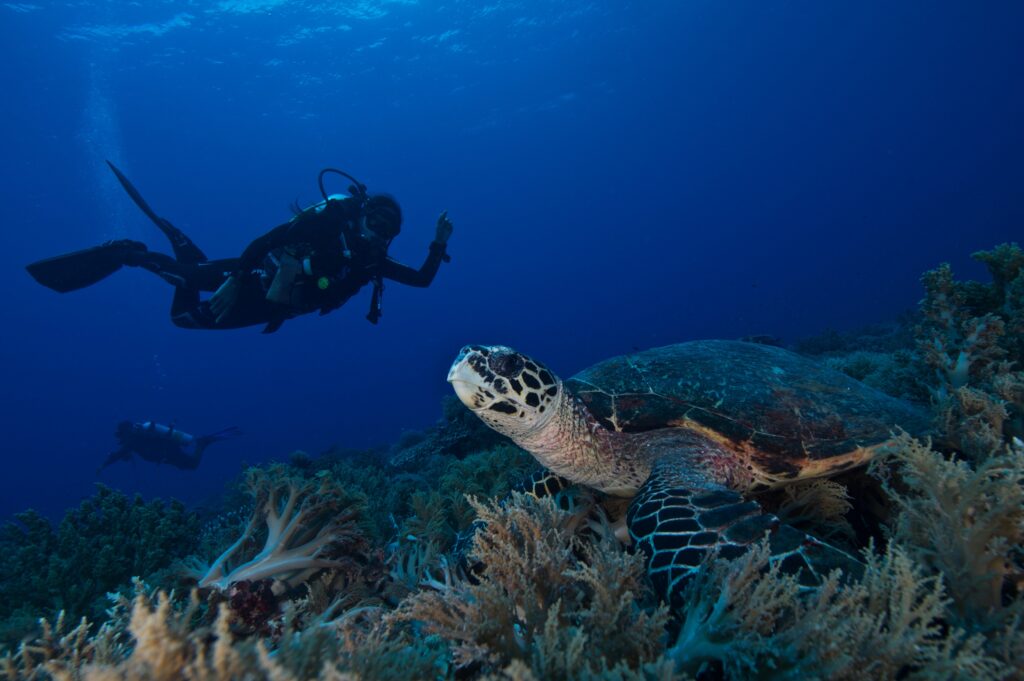
Turtle Head offers a combination of coral reef, sandy sections, and varied marine life. Sea turtles may occasionally be seen resting or feeding around the reef, while schools of tropical fish move above the corals. The site is enjoyable for relaxed reef diving, although conditions may vary depending on the tide and current.
Turtle’s Back
Turtle’s Back features a gently shaped reef formation resembling the curved back of a turtle. Hard and soft corals cover the reef, providing shelter for colourful fish, nudibranchs, moray eels, and crustaceans. With its pleasant reef scenery and opportunities for turtle encounters, the site is a rewarding dive for underwater photographers and marine-life enthusiasts.
Turtle Island
A full-day trip to Turtle Island offers a refreshing change from Sipalay’s local reefs and wrecks. The island is surrounded by coral gardens, reef slopes, and clear tropical water. Divers may encounter sea turtles, schools of reef fish, nudibranchs, moray eels, and other marine life while exploring its reefs.
The exact dive sites are selected according to sea conditions, currents, and the experience level of the group. Turtle sightings are possible but, as with all wildlife encounters, cannot be guaranteed.
Danjugan Island
Danjugan Island is a marine and wildlife sanctuary located off the coast of southern Negros Occidental. Its surrounding waters offer coral reefs, sloping formations, sandy areas, and diverse marine life. A day trip provides divers with an opportunity to experience a protected island environment away from Sipalay’s local dive sites.
Depending on conditions, divers may encounter healthy coral formations, colourful reef fish, turtles, moray eels, nudibranchs, and occasional larger marine animals. Visitors must follow all sanctuary regulations and the instructions of local guides and the Sea Explorers dive team.
Important Diving Information
Dive-site selection depends on weather, currents, visibility, diver certification, and experience. Some sites, particularly the deeper wrecks and offshore reef formations, are suitable only for advanced or appropriately trained divers.
Wreck penetration is not included as part of a standard recreational dive and requires suitable certification, experience, equipment, and planning. Marine-life encounters are natural and cannot be guaranteed.